Dockworkers strike at 100 ports to block arms shipments
Labor unions in six nations halted operations on Friday to protest military logistics and demand improved pay and safety standards.
By Charlotte Dubois ·
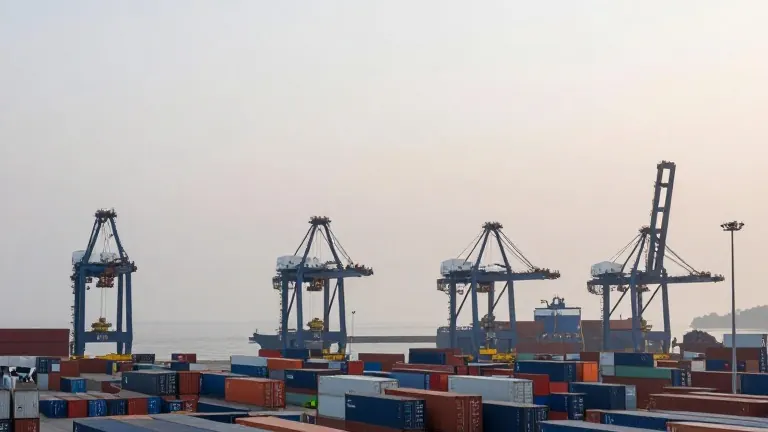
More than 100 ports across Europe, the Mediterranean, and North America saw operations halt on Friday. Dockworkers walked off the job to protest the movement of military supplies and to demand better working conditions. The action affects shipping lanes in regions critical to global trade routes.
Unions in France, Italy, Greece, Spain, Turkey, and Morocco issued a joint call for an end to wars in the Middle East. The statement specifically cited the war in Gaza. The groups requested an end to what they described as the militarization of ports.
The strike follows a pattern of labor disputes in the shipping industry. Previous actions focused on pay and safety. This current campaign adds a geopolitical dimension, targeting the role of commercial ports in military logistics.
In Greece, the Dockworkers Union of Piraeus Port Authority called a strike at the country's largest port. A separate seafarers' strike over pay and safety kept ships docked at several locations, disrupting ferry services. Giorgos Gogos, president of the union, stated that dockworkers do not want their ports to serve as hubs for military material used to kill people.
In Italy, demonstrations were planned in Genoa, Trieste, and Gioia Tauro. These actions coincided with a nationwide general strike. The government ordered transport workers back to work, which reduced the expected disruption. Tens of thousands of people also demonstrated across the country over high prices.
France’s CGT federation called a one-day strike at major ports including Le Havre, Marseille, Dunkirk, and Rouen. The union opposes European policies and French budget proposals that it says threaten social protections. In Turkey, protesters gathered outside Istanbul’s Haydarpasa port with banners reading, "No to war, no to armament!"
Supply chain experts expect the impact on global trade to be limited. Marcus Baker, global head of marine and logistics at Marsh, noted that a 24-hour strike is unlikely to cause major disruption, though perishable goods may be affected. Ed Anderson, a supply chain professor at the University of Texas, said the protests are unlikely to cause outright shortages. Judah Levine of Freightos warned that the strike could worsen congestion at ports like Genoa, where vessels already wait one to two days for a berth.
More Business · Customer Complaints · Report a business · Got a Story?