Fed holds rates steady, but two dissents signal potential hikes by 2027
Chairman Kevin Warsh cuts back on regular meeting frequency, while strategists point to dissenting votes as evidence of a tightening bias.
By Samir Patterson ·
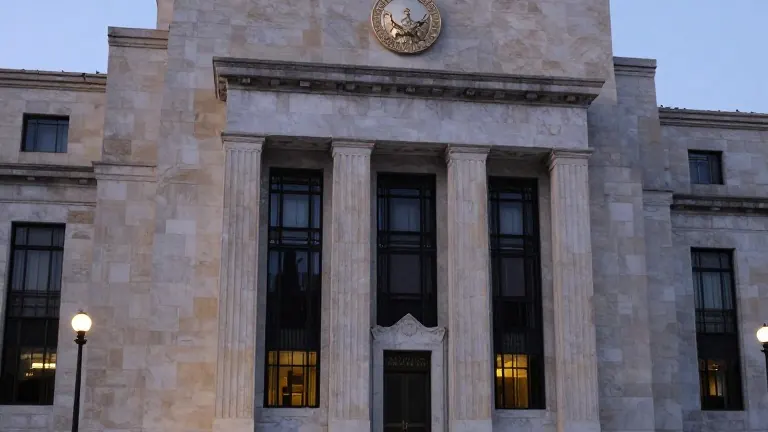
The Federal Reserve held its benchmark interest rate steady on Wednesday, October 28, a move markets had fully priced in. For households with variable-rate debt, the pause means monthly payments on adjustable mortgages and credit cards remain unchanged for now. However, the meeting produced two unexpected dissenting votes, a rarity that suggests internal disagreement over the pace of future policy.
The central bank’s leadership is reducing the number of standard opportunities to adjust rates. Chairman Kevin Warsh announced that the committee will keep eight meetings on the 2027 calendar, but one will focus solely on strategy. That session will not include a rate vote or a post-meeting statement. The following year, two meetings will follow that format, leaving only six scheduled occasions for rate changes in 2028. Emergency meetings remain a separate path for urgent action.
Two committee members opposed the decision to hold rates. Governor Lisa Cook, who has not dissented since joining the board in 2022, and Cleveland Fed President Beth Hammack both voted against the move. Fed governors seldom vote against rate decisions, making Cook’s dissent particularly notable. Both officials are expected to explain their reasoning in statements released before the end of the week.
Warsh described economic growth as strong, citing artificial intelligence as one of several contributing factors. He placed the technology alongside other drivers rather than attributing the expansion solely to it. The committee signaled it is prepared to wait for more data before deciding on the appropriate course for monetary policy. Its reasoning tied that approach to the goal of returning inflation to its 2 percent target in a timely manner.
Market analysts interpret the split vote as a sign that a tightening bias remains in effect. Seema Shah, chief global strategist at Principal Asset Management, said the two dissents reinforced her view that the Fed is leaning hawkish. She forecasts a rate increase in December and another in early 2027. Phil Camporeale, chief investment strategist at JPMorgan Wealth Management, viewed the decision as a preference for patience amid recent geopolitical uncertainty.
The press conference format also changed. The event lasted about thirty minutes, matching the shortened September conference and falling below the previous norm of roughly forty-five minutes. Reporters are now limited to one question. Seating arrangements shifted to reverse alphabetical order this month, replacing a system that had placed larger media organizations near the front.
Thomas Simons, chief U.S. economist at Jefferies, advised against labeling Warsh’s remarks as simply dovish or hawkish. He noted that markets have adapted to the chairman’s communication style, though a fuller understanding of his approach may still take time.
More Business · National news · Customer Complaints · Report a business · Got a Story?