60 Minutes: The Rescue Window That Cost Amal Khalil Her Life in Lebanon
A photojournalist crawled out of rubble in al-Tiri to find her veteran colleague had died while trapped in the same building.
By Giulia Marshall ·
One hour. That is the time window between the moment paramedics rescued Zeinab Faraj from the rubble of a bombed house in southern Lebanon and the estimated time her colleague, Amal Khalil, died in the same structure. Faraj, 21, escaped with visible injuries and a permanent limp, but she was alive. Khalil, a 42-year-old newspaper reporter, was not.
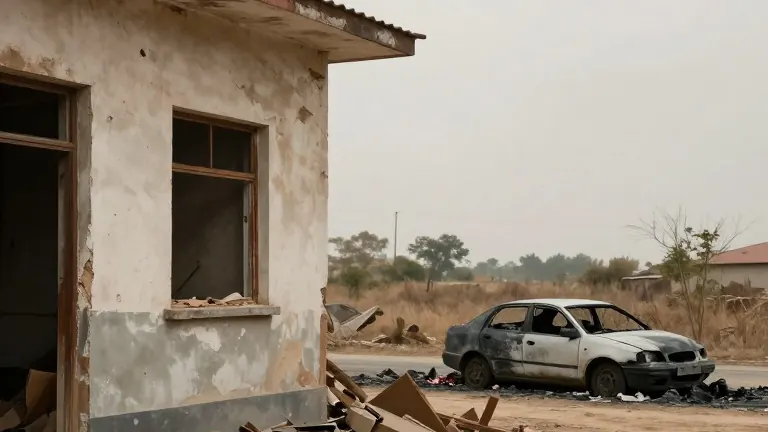
The strike occurred on the afternoon of 22 April, just days after Israel and Lebanon agreed to a ceasefire following a month of heavy airstrikes. The two journalists were in the village of al-Tiri to document the aftermath of the war. They were traveling with Ali Nabil Bazzi, a 27-year-old municipal official, and Mohammed Hourani, 37, a friend of the mayor. The group had met earlier at Tebnine governmental hospital, which locals used as a safe staging ground.
Faraj did not hear the first missile. She heard only Khalil screaming and saw the car ahead of them engulfed in flames. As the women exited their vehicle to assist, drones descended low. Paramedics on the radio urged them to drive away, but a second missile struck their car as they tried to re-enter. The impact threw them backward; Khalil wrapped her arms around Faraj. They took shelter in a nearby house, where Faraj sat on the bathroom floor watching the road.
A third missile fell, shaking the building. Faraj lost consciousness and woke with rubble crushing her body. A paramedic reached her, holding her shoulders as a second worker cleared the debris. Drones circled overhead, and a stun grenade was dropped nearby. As the ambulance pulled away, Faraj asked about Khalil. Nurses initially reassured her, then fell silent. That silence confirmed Khalil’s death.
The Israeli military stated they targeted saboteurs violating the ceasefire. Human rights groups labeled the attack a war crime, noting that the military had previously called Khalil “terrorist media” in a video shared by a spokesperson a week prior. Khalil had also received death threats from Israeli numbers.
Faraj is now preparing to return to university. She struggles to walk and has injuries to her face and hand. She wakes at night screaming, buries herself in pillows, and remains on edge at the sound of aircraft. Returning to frontline journalism feels uncertain. She is repeatedly haunted by the image of Hourani lying on the ground after the first strike, his eyes open and looking at her.