Alcor charges $220,000 to store human bodies at -320 degrees
The Arizona nonprofit preserves members in liquid nitrogen using a chemical process called vitrification, betting that future medicine will allow for revival.
By Giulia Marshall ·
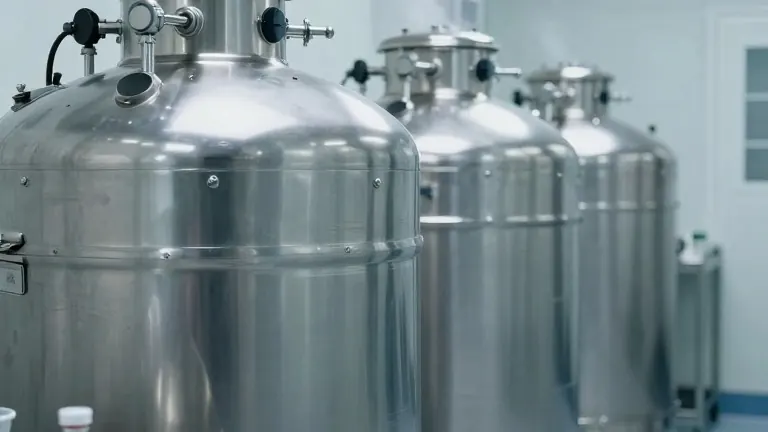
Alcor Life Extension Foundation, a nonprofit based in Scottsdale, Arizona, stores the bodies and heads of its members in liquid nitrogen at roughly minus 320 degrees Fahrenheit. The organization has practiced cryonics since the 1970s, aiming to pause the dying process until medical advances permit repair and revival. Whole-body preservation costs approximately $220,000, while storing only the head, or neuro preservation, ranges from $80,000 to $90,000.
CEO James Arrowood explained that Alcor’s primary goal is to preserve cells and tissue intact through vitrification. This process uses chemicals, including a solution called M22, and controlled cooling to prevent the formation of ice crystals that typically damage cellular structures. Arrowood described M22 as a biological antifreeze, similar to the substance used in car engines to prevent cracking. He noted that while ice forms outside the container, the chemical balance prevents it from forming inside the tissue.
When an Alcor member dies, a specialized rapid response team known as DART arrives at the scene. The team consists of medically trained personnel, including former military members, who begin cooling the body as soon as legally possible. Internal medical staff then spend about a week replacing blood with preservation solutions and gradually lowering the temperature before the patient is placed in a dewar, a large vacuum-insulated container.
Rick Lemler, an author and Alcor member, signed up for preservation after legal death. Lemler, who has been fascinated by science fiction since childhood, views the procedure as a bet on future science rather than a guarantee of success. “It’s something I choose to believe,” Lemler said. “It’s something I believe in and am willing to gamble.” He noted that his decision aligns with the characters in his own books.
Arrowood acknowledged the uncertainty inherent in the field. “I am the president and I am telling you that I don’t know if this will ever work,” he said. He compared the gamble to early medical breakthroughs, citing the first heart transplant patient who knew he would die shortly after the procedure but underwent it to help future generations.
The organization’s history includes legal battles and disputes over regulation, some of which date back three to four decades. Arrowood stated that many of these conflicts are old and that more recent issues often involve logistics and life insurance policies used to fund preservation. Alcor’s youngest member is a 2-year-old girl from Thailand who died from brain cancer. Photos of members line the walls of the facility, and Arrowood said Lemler’s image will be added when his time comes.
Dr. Arthur Caplan, a bioethicist with NYU Grossman School of Medicine, called the expectation of revival far-fetched. He cited barriers such as achieving the correct chemical balance and the difficulty of making a preserved brain function if removed from storage. Caplan noted that a brain placed on a new body would receive nerve signals it might not be able to process. However, he agreed that advanced preservation techniques could eventually improve organ banking and medical repair, such as freezing kidneys or cells for heart repair.