Jury Convicts Russell Brand, Citing Testimony Over Forensics
Prosecutors built the case against the comedian using witness accounts and media reports, while key details about his past remained hidden from the jury.
By Charlotte Dubois ·
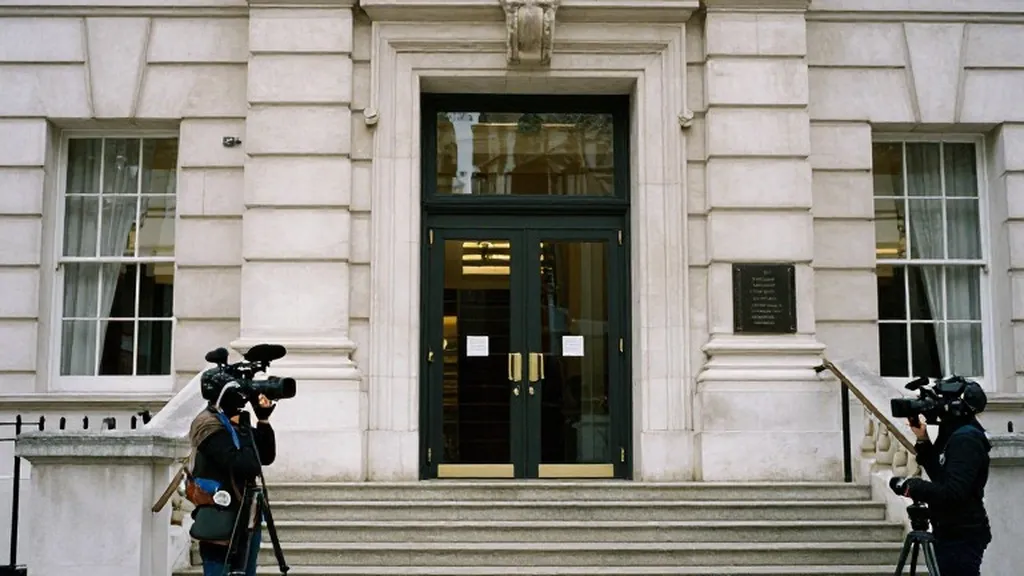
The verdict in the Russell Brand trial has arrived, but the jury at Southwark Crown Court reached it without hearing several significant aspects of the defendant's personal history. Brand, 51, was found guilty of one count of rape and three counts of sexual assault on Thursday. The jury of eight men and four women acquitted him of two counts of rape and one count of attempted indecent assault. For American readers, a Crown Court is a specialized court in the United Kingdom that handles serious criminal cases, often involving juries. The trial concluded after about four weeks of testimony, with the judge, Mr Justice Bennathan, requiring unanimous verdicts on all seven charges. The decision marks the end of a legal process that relied heavily on the credibility of witnesses rather than physical proof.
The most notable absences from the jury's consideration were Brand's marriage to US singer Katy Perry, his past drug and alcohol dependency, and his treatment at a sex addiction clinic. These details were kept from the jurors, a decision that prosecutors agreed to make. By excluding these elements, the case was framed strictly around the specific allegations made by the six complainants. The jury never heard about the high-profile marriage that ended in 2012, nor the personal struggles with substance use that Brand has discussed in his memoirs. This exclusion meant the verdict was based entirely on the pattern of behavior described by the women, rather than a broader narrative of his personal life and health.
The case was built without forensic evidence, a challenge inherent in allegations spanning a decade from 1999 to 2009. Detective Superintendent Andy Furphy of the Metropolitan Police noted that the earliest allegation dated back 27 years, meaning there was no CCTV or forensic evidence to support the charges. Instead, the prosecution relied on more than 340 witness statements taken during the three-year investigation. One officer was even assigned to read Brand's books and watch his stand-up routines to understand his character. This lack of physical evidence placed the burden squarely on the testimonial evidence, requiring the jury to weigh the consistency of the complainants' accounts against Brand's denials.
Brand had pleaded not guilty to all charges, arguing that his lifestyle, while promiscuous, was lawful. His defense barrister, Ian Winter KC, described the comedian as not a psychopath but a man who lived a highly promiscuous life. Winter KC argued that the women came forward at the invitation of a 2023 Channel 4 documentary, suggesting that media coverage had influenced the timeline of the accusations. However, the jury convicted on the counts involving a young fan from 2009 and three other incidents between 2004 and 2009. The complainants were anonymous, giving evidence from behind a screen to protect their identities while detailing the events they endured.
The prosecution, led by Riel Karmy-Jones KC, painted Brand as a calculating manipulator who treated women as a disposable commodity. She highlighted a consistent pattern of compliments and flattery followed by a sudden change in demeanor, which one woman described as his eyes changing from charming to frightening. The jury accepted this narrative for four of the seven counts. Brand, who had been free until now, was remanded in custody by the judge. Being remanded in custody means the defendant is held in jail until sentencing because the judge believes there is a risk they might flee or interfere with the process, though the judge noted that the hardship to his children was a factor in his decision.
Brand's reaction to the verdict was subdued. He closed his eyes as the convictions were read and later told his wife, Laura, that he loved her. As he was led to the cells, he made okay gestures to his lawyers and repeatedly said, I'm good, I'm good, I'm good. The judge indicated that sentencing would take place on Monday, November 9, 2026. Winter KC had asked for bail over the weekend as an act of humanity so Brand could say goodbye to his three young children, one of whom had a birthday on Wednesday. The judge refused, stating that the hardship was caused by the father's serious criminal offending.
The Metropolitan Police has confirmed that Brand is under investigation over rape allegations by two more women. These are allegations under police investigation, not charges, and files have been submitted to the Crown Prosecution Service for both complainants. Superintendent Furphy urged other potential victims to come forward, praising the extraordinary courage and resilience of the women who testified in this trial. He said the conviction sends a clear message that no one is above the law, no matter how famous or powerful they may be. The investigation, known as Operation Actinolite, began in 2023 after joint reporting by The Times, The Sunday Times, and Channel 4's Dispatches.
The long road from the initial reporting in September 2023 to this conviction involved extensive police work and legal scrutiny. Brand was interviewed under caution four times before being charged in early 2025. The case highlights the difficulty of prosecuting historical sexual offenses where physical evidence is scarce. The jury's decision to convict on four counts while acquitting on three suggests a careful evaluation of the specific evidence presented for each incident. The absence of forensic data meant the jurors had to rely on the strength of the testimonial evidence and the credibility of the witnesses.
Brand's former personal assistant, Helen Berger, testified about his intense sexual appetite, while a former friend, Mark Pinheiro, provided evidence for the prosecution. Extracts from Brand's 2007 memoir were also read to the jury, adding context to his self-awareness regarding his past behavior. The defense argued that Brand had never forced anyone and that consent was fundamental to his understanding of relationships. However, the jury's verdict indicates that they were persuaded by the complainants' accounts of the specific incidents in question. The case is now moving toward sentencing, where the judge will determine the length of Brand's custodial term.