Arab Parties Hold Keys to Israeli Government After Election
Netanyahu’s bloc lost ground, leaving opposition leaders to decide if they can unite with Arab lawmakers to form a majority.
By Giulia Marshall ·
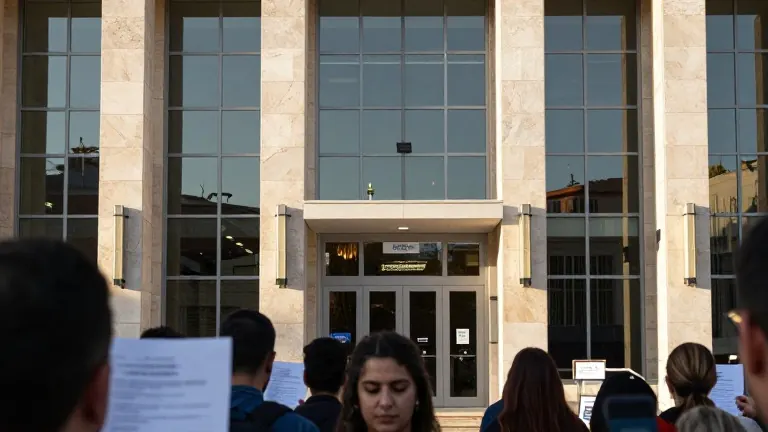
The October 27 Israeli parliamentary election has left Prime Minister Benjamin Netanyahu without a clear path to power, forcing a contest between fragmented political blocs and the Arab parties that now command a decisive number of seats. Neither Netanyahu’s coalition nor the opposition bloc secured the 61 seats required for a majority in the 120-member Knesset. This stalemate places Arab-led parties at the center of the government formation process.
Preliminary results released Thursday show Netanyahu’s bloc holding 53 seats, a drop from 68 in the previous Knesset. The opposition bloc, led by former military chief Gadi Eisenkot, secured 48 seats. The Joint List won 11 seats and the Ra’am party won eight, giving the two Arab-led parties a combined total of 19 seats. This represents nearly double their previous representation. Official certification of the results is expected on November 4.
Mathematically, the opposition and Arab parties together hold 67 seats, enough to replace Netanyahu if they agree on a governing arrangement. However, internal divisions within the opposition complicate this alliance. Leaders Naftali Bennett, Avigdor Liberman, and Eisenkot have previously expressed reluctance to rely on Arab parties. In contrast, Yair Golan, leader of the Democrats party, has urged cooperation to remove Netanyahu. Yashar won 21 seats, B’Yachad 12, the Democrats eight, and Yisrael Beyteinu seven.
Netanyahu’s Likud party has contested the results by alleging bribery and foreign interference. The party claims cash payments were linked to Ra’am ballots and that Qatar financed efforts to influence the vote, an allegation Doha denies. In a letter made public Thursday, Central Elections Committee Chairman Justice Noam Sohlberg directed the Shin Bet security agency to investigate these suspicions. The committee stressed that the allegations have not been verified. Police also arrested seven suspects in southern Israel for alleged vote-buying.
Acting Central Elections Committee Director General Dean Livne stated there is no basis for claims of systematic violations. The Shin Bet said its inquiry originated from independent intelligence and did not implicate Arab voters as a community. Ra’am leader Mansour Abbas denied wrongdoing and welcomed the investigation. Reem Hazzan, a member of the Joint List, rejected the allegations as an attempt to undermine Arab representation. She suggested that if money moved from Qatar, investigators should also look into Netanyahu’s aides.
Arab voters cited frustration over domestic policies, organized crime, and the wars in Gaza and the West Bank as primary motivations for their high turnout. Nidal Foqaha, a political analyst in Ramallah, noted that the results reflect growing insecurity among Arab citizens. He pointed to the policies of National Security Minister Itamar Ben-Gvir as a driving factor. Hazzan linked the turnout to anger over the Gaza war and conditions in the West Bank, stating that voters believed removing Netanyahu could bring tangible improvements.
The Joint List remains willing to support an alternative government, even if it does not formally join the coalition. Hazzan said the party is prepared to vote in favor of a government to remove Netanyahu. However, opposition leaders must decide if their commitment to defeating Netanyahu outweighs their hesitation to work with Arab lawmakers. Without such cooperation, a national unity government involving Likud and some of Netanyahu’s rivals could form, potentially allowing him to remain in office under a rotation agreement.
President Isaac Herzog will consult with parliamentary factions after official results are published to assign a government formation task. The first candidate has 28 days, extendable by 14, to form a government. If that fails, other candidates will be given opportunities. If all efforts fail, another election will be held. Netanyahu will remain prime minister until a successor takes office. Foqaha cautioned that while Palestinians in Ramallah are realistic about Netanyahu’s durability, any government excluding hard-line ministers like Ben-Gvir could implement practical improvements in security and financial conditions.