Brazilian Runoff: Lula Defeats Flávio Bolsonaro by 4.4 Million Votes
The incumbent president secured 51.79 percent of the vote in a surge that reversed his initial deficit, though Flávio Bolsonaro is moving to annul the results over a last-minute extension of voting hours.
By Giulia Marshall ·
Brazil’s political system has seen many close races, but few with the procedural complications that marked the 2026 presidential runoff. On Sunday, Luiz Inácio Lula da Silva claimed a fourth term in office after defeating Flávio Bolsonaro in a contest that ended with a 4.4 million vote margin.
Lula, the leader of the Workers’ Party (PT), captured 64.2 million votes, or 51.79 percent of the total. Flávio Bolsonaro, the son of former President Jair Bolsonaro, received 59.8 million votes, representing 48.21 percent. The outcome reversed the results of the first round held on October 4, where Flávio Bolsonaro led by two percentage points.
Pollsters had struggled to predict the scale of Lula’s comeback. Throughout the second round campaign, surveys indicated a statistical tie, with no poll placing the incumbent ahead until the final days. The final gap of nearly four points exceeded the margin by which Lula defeated his son-in-law’s father, Jair Bolsonaro, in the 2022 election.
In his victory speech, Lula described the campaign as a struggle against authoritarianism and denial. He credited young voters for mobilizing to protect democratic institutions and older citizens for turning out in high numbers. This turnout helped reduce the high abstention rates recorded in the first round.
Lula also framed the election as a rejection of external influence, specifically from U.S. President Donald Trump. He stated that Brazil demonstrated it would not accept a peripheral role in global discussions, positioning the country as a central actor instead.
Flávio Bolsonaro disputed the validity of the count immediately after results were finalized. He announced plans to petition the courts to annul the election, citing a judicial order that extended voting hours by two hours nationwide. The extension was ordered by Supreme Court Justice Cristiano Zanin, who previously served as Lula’s lawyer. The order was issued one minute after the standard closing time for polling stations.
The late announcement caused logistical issues. Many polling stations did not receive the instruction in time and closed at their regular hour, creating confusion among voters. Kassio Nunes Marques, the president of the Superior Electoral Court, acknowledged that the delay created technical, operational, and security difficulties.
Flávio Bolsonaro called the situation unacceptable, arguing it violated the equal rights of Brazilian voters. In a statement in Brasilia, he said it was inexplicable that the rules were changed by Lula’s allies on the Supreme Court. The PT party argued that the extension was necessary because right-wing controlled cities failed to provide sufficient free bus services for voters, a requirement imposed by the courts that disproportionately affected poorer voters who typically support the left.
Despite the legal challenge, Hugo Motta, the speaker of the Chamber of Deputies, and Davi Alcolumbre, the president of the Senate, both recognized Lula’s victory. Both leaders are political allies of the president.
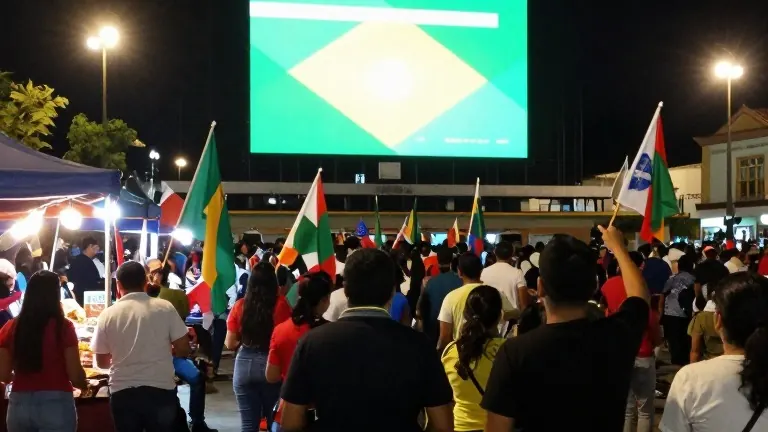
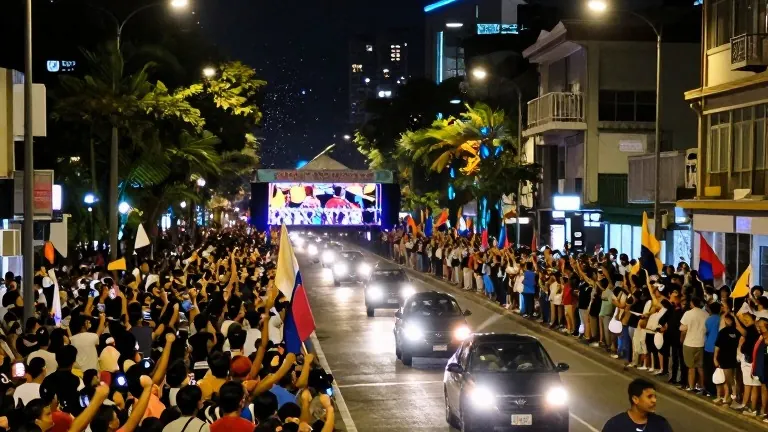
Celebrations erupted across the country, with the largest gathering occurring on Paulista Avenue in São Paulo. Tens of thousands of supporters chanted “dictatorship never again” as Lula addressed the crowd. The scale of the gathering exceeded that of his 2022 victory and mirrored the massive rally that closed the left’s campaign on Saturday.
Approaching his 81st birthday, Lula adapted his campaign strategy by adopting social media for the first time. This shift, combined with a fear-based campaign warning of the risks associated with a Bolsonaro presidency, drove the unexpected surge. Lula now faces the task of governing with a Congress that is more right-leaning than any previous legislature in the country’s democratic history.