Iran calls Tehran security talks a move toward regional autonomy
Iranian and Gulf officials discussed the conflict in Tehran and Cairo as Egypt prepares to send defensive troops to Saudi Arabia.
By Giulia Marshall ·
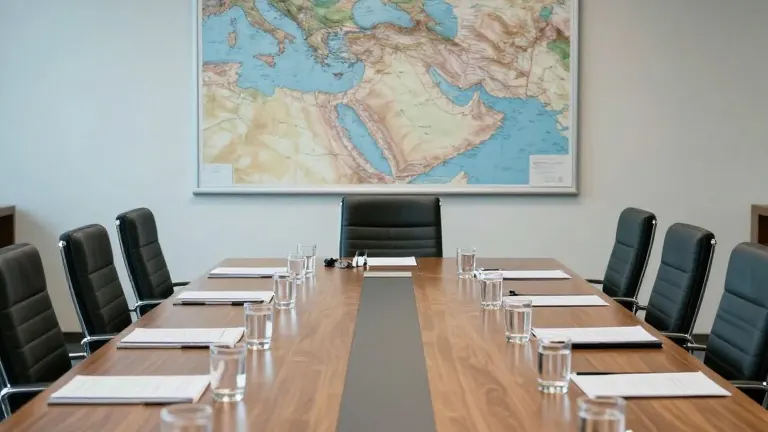
Iranian Foreign Minister Abbas Araghchi declared that a Monday meeting in Tehran with security officials from Saudi Arabia, Pakistan, and Turkey marked a concrete step toward regional peace. Araghchi argued that the four nations should manage their own security needs without relying on the military presence of extra-regional powers. He posted these comments on social media on Wednesday but did not provide specific details about the agenda or outcomes of the one-day session.
The talks occurred while speculation grew that the region was sliding back into all-out war. Tensions have risen as Saudi Arabia faces repeated attacks from Houthi rebels in Yemen, a group backed by Iran. Araghchi’s emphasis on local control reflects a diplomatic push to resolve the crisis internally rather than through external intervention.
Egypt is pursuing a parallel diplomatic track to contain the spreading conflict. Foreign Minister Badr Abdelatty held telephone conversations this week with Saudi Prince Faisal bin Farhan and Emirati Sheikh Abdullah bin Zayed Al Nahyan. The Egyptian Foreign Ministry stated that the discussions focused on political solutions to the ongoing regional crisis.
Egypt’s diplomatic efforts are paired with a concrete military commitment. The country’s highest security body decided this month to provide military support to Saudi Arabia to defend the kingdom against Houthi attacks. Lawmakers approved the decision in a closed-door vote earlier this week. The move signals a shift in Egypt’s posture, aligning its forces directly with the Saudi defense perimeter.
The Egyptian presidency clarified the scope of this intervention. The military support will be strictly defensive in nature. This distinction aims to reassure allies and the domestic public that Cairo is not launching an offensive campaign but rather reinforcing a partner under direct threat.
The backdrop for these moves is a war that began on Feb. 28, during which Iran attacked neighboring Gulf Arab countries. Iran stated its targets were U.S. facilities and interests in the region. Gulf states countered that Iranian strikes also hit civilian facilities and infrastructure, highlighting the wide reach of the conflict.
As Wednesday’s developments unfolded, the region’s major powers signaled a willingness to coordinate. Iran sought to frame the Tehran meeting as a foundation for dialogue, while Egypt and its Gulf neighbors worked to stabilize the situation through both phone calls and troop deployments. The convergence of these diplomatic and military actions suggests a coordinated regional response to the ongoing crisis.