Netanyahu Faces Eisenkot in Israeli Election
More than 7.3 million Israelis vote Tuesday in a tight race that will determine if the 77-year-old premier continues his nearly two decades in power.
By Giulia Marshall ·
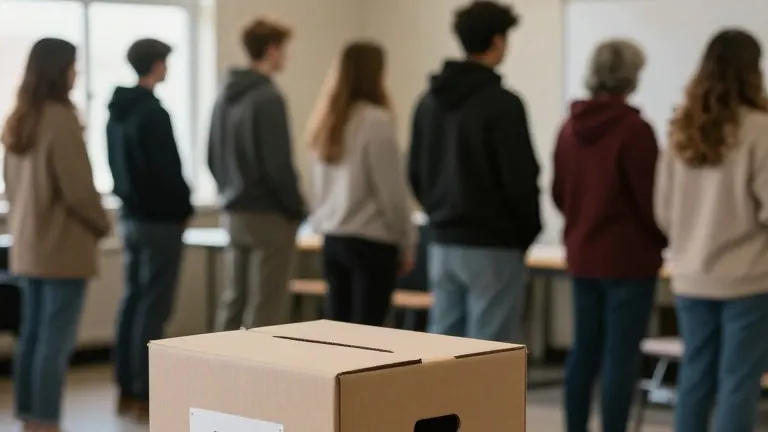
More than 7.3 million Israelis are eligible to vote on Tuesday in a national election that will decide whether Prime Minister Benjamin Netanyahu remains in office after nearly two decades of dominance. The vote is widely viewed as a referendum on his leadership following the Hamas-led attack on October 7, 2023, and the subsequent wars in Gaza, Lebanon, and Iran.
Israelis vote for parties rather than individual leaders, and no single party has ever secured a 61-seat majority in the 120-member Knesset. Opinion polls indicate a close contest with no clear winner, which is expected to trigger weeks or months of coalition negotiations among approximately a dozen parties.
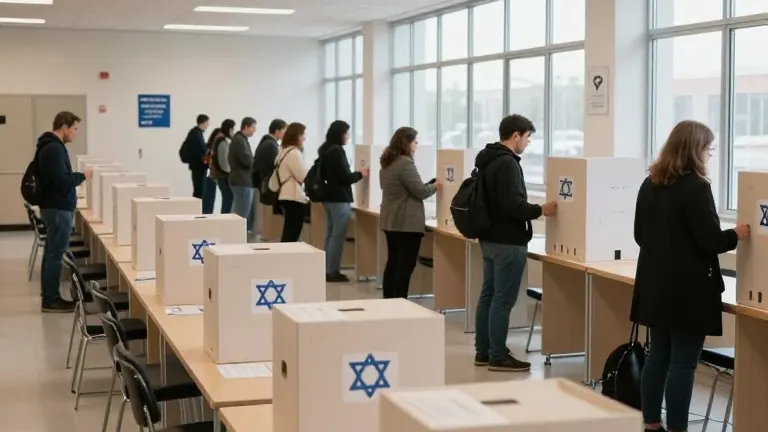
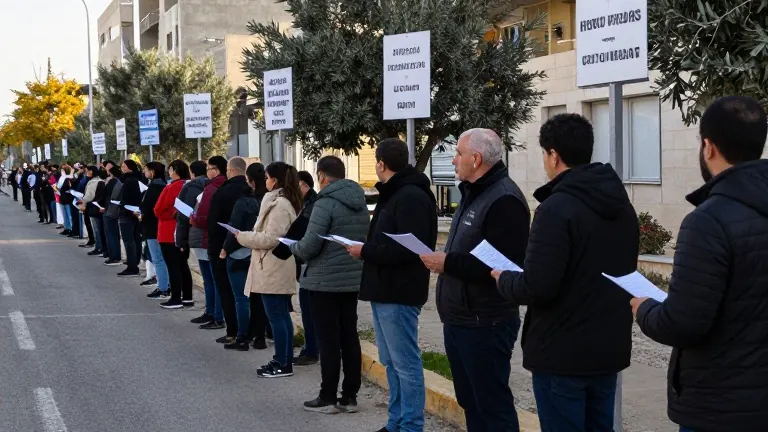
The atmosphere at polling stations reflects the tension of the moment. In Jerusalem, Noga Mizrahi, a voter from kibbutz Nirim which was attacked on October 7, described the election as critical. In Kiryat Shmona, a Netanyahu stronghold near the Lebanese border, a man tore down a poster of Gadi Eisenkot, the former military chief and Netanyahu’s primary rival. Families of those killed and former hostages observed a moment of silence in Tel Aviv.
Eisenkot campaigned in Ofakim, a southern community struck during the 2023 attack, aiming to highlight security failures. He lost his son and two nephews in combat in Gaza. His campaign emphasizes accountability for the October 7 breakdown and the failure to convert military gains into diplomatic results. Netanyahu’s bloc, meanwhile, focuses on his track record in forming coalitions and his close ties with U.S. President Donald Trump, who endorsed his reelection earlier this month.
According to the Central Election Committee, around 330,000 young Israelis who spent their high school years during the war are also casting ballots. Approximately 12,000 polling stations opened across the country, staffed by thousands of volunteer observers from groups like Elections Guards. Eyal Sher, a volunteer, stated the group aimed to ensure procedures remained intact in what he called a corrupt government's attempt to stay in power.
The candidates have largely avoided debating Israel's wartime conduct in Gaza, which resulted in an international arrest warrant for Netanyahu. Instead, the debate centers on the security failure of October 7, efforts to exempt ultra-Orthodox Jews from military service, and a 2023 judicial overhaul. Both the occupation of southern Lebanon and parts of Syria, and the wars against Iran, maintain broad support among the Israeli public.
Polling stations in most areas will close at 10 p.m. Ballots are counted manually at each location immediately after voting ends. A strong performance could end Netanyahu's political career, while a victory would solidify his status as a political survivor. The outcome will determine whether the current leadership continues its strategy or if a new era begins in Israeli politics.