Brazil's real crashes 8% after Trump disputes Lula victory
The currency suffered its steepest drop since 2002 as the US president questioned the integrity of the runoff, despite the opposition party accepting the result.
By Samir Patterson ·

The Brazilian real lost 8.1% of its value against the US dollar on Monday, marking the currency’s largest one-day decline since 2002.
The sharp financial drop followed remarks by President Donald Trump, who described the outcome of Brazil’s presidential runoff as suspicious. Trump told reporters on Monday that the victory of incumbent President Luiz Inácio Lula da Silva “looked like another rigged election.” He noted that the process “looked very bad to me” and called the two-hour extension of voting ordered by the Supreme Court “very strange.”
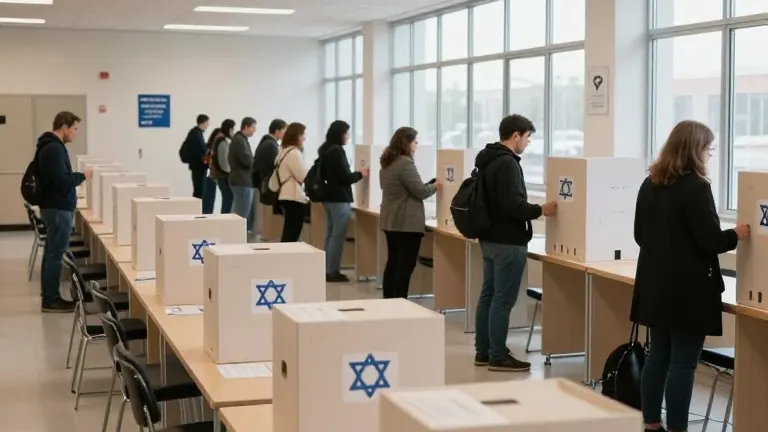
Lula defeated Flávio Bolsonaro, the son of former President Jair Bolsonaro, by a margin of more than 4 million votes. Despite this clear lead, Flávio Bolsonaro had refused to concede defeat after the runoff on Sunday. He stated his intention to seek the annulment of the result, a stance rooted in the Supreme Court’s decision to extend voting hours.
The political uncertainty began to resolve on Monday when the Liberal Party, Bolsonaro’s political home, issued a statement acknowledging the outcome. Valdemar Costa Neto, the party leader, signed the document. “We recognize the presidential election results,” Costa Neto said. He added that the party believed the issues raised during the count needed proper clarification. Jair Bolsonaro, who is under house arrest, remained silent after the party statement but said earlier in the day that he would comply with a federal police order to hand over his passports.
Analysts noted that the vote count in the extended two-hour window was minimal. Pedro Burgos, a professor at Insper, analyzed electoral records and found that fewer than 35,000 votes were cast during that period. This represents approximately 0.03% of the total votes. Trump did not provide specific evidence for his claims of impropriety, though Reuters previously reported that US State Department officials had campaigned to return the Bolsonaro family to power.
Vice President Geraldo Alckmin responded to the international scrutiny in a television interview with Rede Vanguarda. He described Trump’s remarks as “totally wrong” and “unfounded.” Alckmin defended the integrity of Brazil’s electoral system, a stance that contrasts with the skepticism shown by some market watchers.
Investors reacted negatively to Lula’s win, which was greeted with dismay by those who had bet on a victory for Bolsonaro. The Brazilian stock exchange recorded its steepest one-day fall since 2020. Andres Abadia, chief Latin America economist at Pantheon Macroeconomics, stated that the initial selloff could moderate as election-related positions are unwound. However, he noted that investors will demand convincing fiscal commitments before rebuilding exposure to the market.
Lula’s victory marks his fourth mandate in office. He will now face a Congress that has shifted further to the right following a surge of conservative voters in the first round of the general election. This legislative composition may pose challenges for his agenda, which focuses on cutting poverty and inequality while maintaining record-low unemployment and deforestation rates.