Defence allies meet in Tehran
Leaders from Pakistan, Saudi Arabia, and Turkiye are in Iran to discuss Houthi attacks and US threats.
By Samir Patterson ·
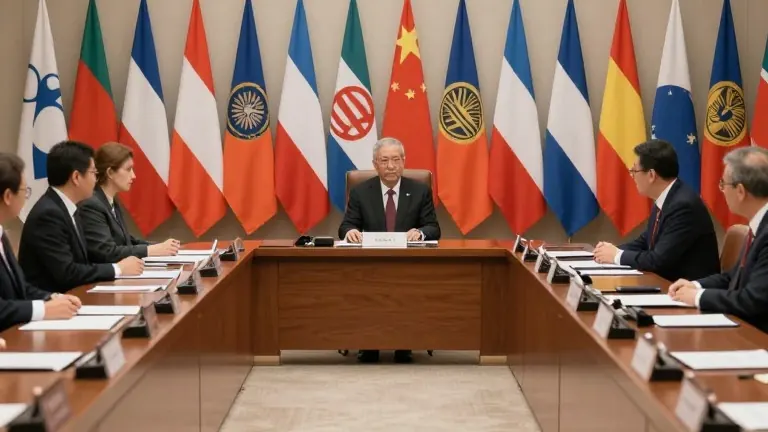
Ministers and security chiefs from Pakistan, Saudi Arabia, and Turkiye are currently in Tehran. They are the three nations that signed the Mecca Joint Defence Agreement. The group met with Iranian President Masoud Pezeshkian and security chief Mohsen Rezaei. These talks are happening while the United States threatens new strikes on Iran.
The meetings are part of a rush of diplomatic activity aimed at stopping a new escalation. Ali Vaez, deputy director of the Middle East and North Africa Program at the International Crisis Group, said the visit is an attempt to tip the balance toward compromise. He warned that without a credible formula to bridge the divide, the allies may have little more than goodwill in a race against the clock.
A major topic of discussion is the wave of missile and drone attacks by Yemen’s Houthi rebels. The Houthis are allied with Tehran and have targeted Saudi Arabia. Riyadh supports Yemen’s internationally recognized government. Ayesha Siddiqa, a senior research fellow at King’s College London, noted that Saudi Arabia is pressuring its partners for more support. She said the expectation from Riyadh has grown alongside the offensive from Yemen.
Siddiqa observed that Turkiye and Pakistan cannot afford to commit troops to the ground in Yemen. She linked the latest diplomatic push to visits by Pakistani army chief Asim Munir to Saudi Arabia and Iran last week. This timing coincides with Islamabad’s restrictions on overland border trade with Tehran. Those restrictions are in place due to the US blockade on Iran.
Iranian authorities have stated they favor security originating from within the region. Umer Karim, who researches Saudi foreign policy, said the talks are more concerned with Saudi Arabia’s security than reducing the risk of a renewed war between Iran and the US. He suggested the meetings involve an attempt by Turkiye and Pakistan to compel Iran to reach a compromise.
US President Donald Trump is considering new attacks to break the diplomatic deadlock. Iran has refused to agree to any peace agreement unless several of its demands are met. Washington wants international shipping through the Strait of Hormuz to resume without attacks. The US also seeks to rein in Tehran’s nuclear program and bring in international inspectors to assess Iran’s highly enriched uranium.
Tehran wants to lift the US naval blockade of its southern ports, which has halted crude oil exports. Iran also wants to return to a memorandum of understanding agreed between the two countries in June. The US has refused this, with Trump saying he is left with a choice to finish the job by launching major strikes on Iran’s civilian infrastructure.
The US Department of State issued an order on October 21 for nonemergency government employees and their family members to leave Saudi Arabia. This move was made for safety due to the Houthi threat. Analysts say the Mecca signatories will likely try to minimize the impact on Saudi Arabia if war breaks out again. Karim said these negotiations will likely yield little because the actors involved lack the leverage to affect Iran’s strategic thinking.