Midterm Politics: Data centers drive policy shifts in five states
Candidates in Texas, Florida, Pennsylvania, Ohio, and Michigan are adjusting their stances on server farms as local opposition grows.
By Giulia Marshall ·
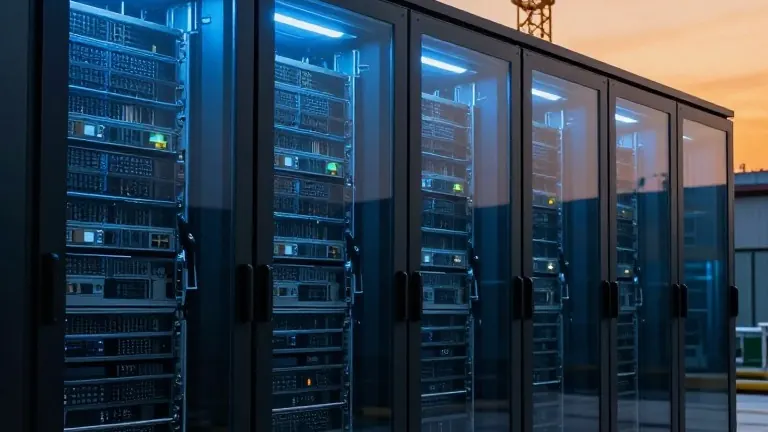
Voters in five states face new policy proposals aimed at curbing the growth of data centers as the 2026 midterm elections approach. Candidates from both major parties are adopting stricter stances on server farm development, ranging from one-year bans to tax reforms. These shifts reflect a growing backlash against the infrastructure and energy costs associated with these facilities.
The tension between tech industry spending and local opposition has defined this election cycle. Leading the Future, a super PAC backed by venture capitalist Marc Andreessen and OpenAI President Greg Brockman, spent $45 million in the past year. Public First Action, an Anthropic-backed group, has raised $80 million. Tomorrow Together, another new super PAC, launched $4 million in ads for battleground House races focusing on AI safety.
In Texas, which has the second-highest number of planned data center projects in the country after Virginia, the gubernatorial and Senate races have centered on this issue. State Representative James Talarico, the Democratic Senate candidate, unveiled a plan in July to end sales tax incentives and require closed-loop water systems. He also proposed an AI Dividend funded by a tax on AI-attributable profits. His Republican opponent, Attorney General Ken Paxton, unveiled a plan in August to keep Chinese technology out of US data centers and hold companies criminally liable if AI chatbots undermine children's safety.
The Texas governor's race also features sharp contrasts. Democratic challenger Gina Hinojosa called for a statewide moratorium on development. She criticized incumbent Greg Abbott for flip-flopping, noting that his office celebrated a $40 billion Google investment last year but announced an audit in August that could slow new facilities. Hinojosa stated in a video, “Greg Abbott has zero credibility here. Nobody believes that the arsonist is about to put out the fire.” Cook Political Report changed its rating for the race from likely Republican to lean Republican earlier this month.
In Florida, former congressman David Jolly pledged to install a one-year ban on hyperscale data centers on his first day in office. His opponent, Congressman Byron Donalds, introduced the Protecting Ratepayers Act in July to require developers to fund their own energy and water needs. Donalds has been branded “Data Center Donalds” by opponents. An October NBC6/Telemundo poll found that 45 percent of likely voters opposed data centers in Florida, while 59 percent opposed them in their own communities. Despite this, Donalds leads Jolly 48 percent to 41 percent in that polling.
Pennsylvania candidates have also shifted their rhetoric. Governor Josh Shapiro signed an executive order in August prohibiting nondisclosure agreements for developers and removing AI data centers from fast-track permitting. This follows his announcement of a $20 billion Amazon investment last year. Treasurer Stacy Garrity, the Republican challenger, previously called rural areas “perfect places” for data centers but now supports a pause of no more than three years. A Quinnipiac University poll in early October found that 64 percent of likely voters believed AI data centers would do more harm than good.
The Ohio Senate race between incumbent Jon Husted and challenger Sherrod Brown is rated a toss-up by Cook Political Report. Brown has labeled Husted “the face of data centers” in the state, citing his support for tax breaks during his time as lieutenant governor. Husted introduced the Ratepayer Protection Act to make large customers cover their energy costs. The bill passed the House but narrowly failed in the Senate. A leaked NRSC memo described data centers as an “anchor hanging around Husted’s neck” and warned that losing the seat could make politicians across the country wary of the industry.
RealClearPolling averages show Brown with a slight edge in Ohio. In Michigan, data centers have also become a central topic in the Senate race, though the source text cuts off before detailing specific policy proposals from Michigan candidates. The current cycle marks a departure from previous elections where infrastructure projects were primarily viewed as economic opportunities.
The next steps in these races will depend on how candidates continue to adjust their platforms as the election nears. Polling data suggests that opposition to local development is stronger than general support for the industry. Candidates who can clearly define their stance on energy costs and community control may gain an advantage in these competitive contests.