El Salvador Deploys 2,000 Troops to Haiti to Recover Missing Airmen
The military intervention escalates a dispute after four technicians vanished in an ambush, with Bukele rejecting initial recovery claims.
By Charlotte Dubois ·
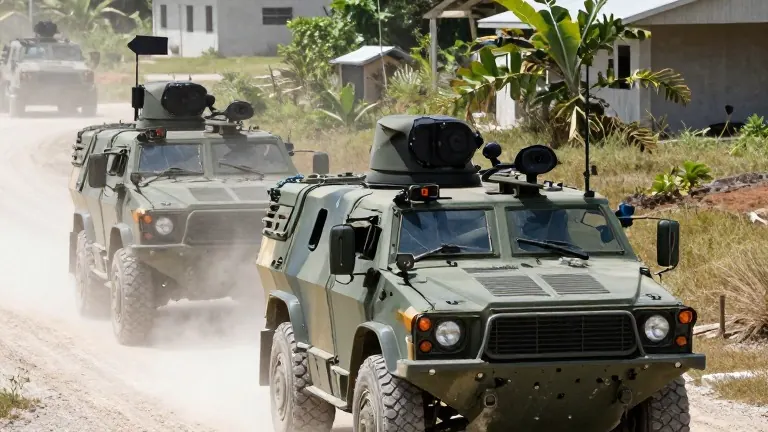
El Salvador has deployed more than 2,000 soldiers to Haiti.
The force aims to recover four air force technicians who disappeared roughly two weeks ago. President Nayib Bukele notified Haitian Prime Minister Alix Didier Fils-Aime of the deployment earlier this week. The Salvadoran foreign ministry described the mission as a large-scale operation supported by other nations and international bodies.
The missing men served with the Gang Suppression Force, a UN-backed anti-gang mission. They were traveling in an armored vehicle back to their base when they were ambushed in Croix-des-Bouquets, an area under gang control. No armed group has claimed responsibility for the attack. Bukele stated the Salvadoran troops would also assist with security efforts against gangs in Haiti.
Tensions between the two governments have risen over the handling of the recovery. Earlier this week, Haiti handed four bodies to special forces, asserting they belonged to the missing servicemen. Bukele rejected this claim, stating the remains did not match the missing personnel. He noted that one body was a child and another wore the uniform of a different country.
The dispute has drawn public attention to the operational challenges facing the multinational force. Bukele posted on X last week that he would wipe out Haitian gangs if they did not release the Salvadorans. He said he would apply the same strategy used against gangs in El Salvador.
The Gang Suppression Force received expanded powers from the UN Security Council in October of last year. Despite this mandate, the force has struggled to access areas where gangs maintain dominance. Gang-related violence in Haiti has intensified, with the UN reporting more than 5,700 deaths this year.
Armed groups currently control much of the capital. Conditions have worsened since the assassination of President Jovenel Moïse in 2021, which left a political vacuum that has deepened the crisis.